*Healthier Punjab This Independence Day: Bhagwant Mann Govt's Mukh Mantri Sehat Yojana Crosses 6 Lakh Treatments*
*₹10 Lakh Cashless Healthcare Cover Helps Punjab Families Access Critical Treatment*
*From Dialysis To Cancer Care, Mukh Mantri Sehat Yojana Provides Critical Healthcare Without Financial Burden*
*Cashless Healthcare Giving Punjab Families Relief From High Treatment Costs: Dr. Balbir Singh*
*After Successful Treatment, I'm Much Better Than Before And Living My Life With New Hope: Sandeep Kaur, Beneficiary*
*My Breast Cancer Treatment Has Started Free Of Cost & Is Continuing Without Any Expense: Nishi Gupta, Beneficiary*
*After Receiving Free Treatment For My Heart Condition, I Can Now Live Happier Life: Hakam Singh, Beneficiary*
*We Would Have Just Died Thinking About Where We Would Get Money From: Gurcharan Singh, Beneficiary*
As India celebrates its 80th Independence Day, freedom from the fear of an unaffordable medical emergency is emerging as an important measure of public welfare. In Punjab, the Mukh Mantri Sehat Yojana (MMSY) provides cashless treatment of up to ₹10 lakh per family per year and has recorded more than six lakh treatments over the past seven months.
State Health Agency data show that 26,18,712 beneficiaries have been enrolled against a reported eligible base of 69,12,697 families. So far, 3,02,906 patients have received treatment, accounting for 6,06,892 treatments and 15,267 procedures. The scheme has 880 empanelled hospitals, with the reported average claim value standing at ₹14,628.04.
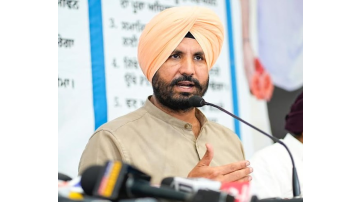
On this occasion, Punjab Health and Family Welfare Minister Dr. Balbir Singh said, “From dialysis to cancer care, Mukh Mantri Sehat Yojana crosses six lakh treatments in Punjab. The scale of utilisation is particularly visible in critical and high-cost healthcare. Chronic haemodialysis accounts for 1,99,417 treatments, while 60,504 cancer cases and 1,85,220 emergency cases have also been recorded.”
Additionally, cardiac care remains a major component. The data records 10,428 PTCA procedures, including diagnostic angiography, involving expenditure of ₹100 crore. CABG accounted for 611 treatments and approximately ₹8.20 crore, while 507 pacemaker procedures involved about ₹6.79 crore.
Orthopaedic treatment has also seen substantial utilisation, with 11,796 total knee replacements involving expenditure of ₹94.89 crore. The scheme recorded 1,092 total hip replacements costing ₹10.75 crore, along with more than 2,200 fracture fixation procedures. Cancer treatment accounted for approximately ₹159.41 crore across 60,504 reported cases, while dialysis expenditure stood at ₹33.14 crore for 2,02,793 reported cases.
The scheme’s reach extends across public and private hospitals. Private facilities handled 3,36,161 cases, compared with 2,70,731 cases in government hospitals. Reported expenditure stood at ₹614.08 crore and ₹479.85 crore respectively.
District-level figures show varying patterns of utilisation. Patiala recorded the highest number of patients treated at 28,977, followed by Bathinda with 23,446, Ludhiana with 22,620 and Jalandhar with 20,193. Bathinda recorded the highest expenditure at ₹200 crore, followed by Patiala at ₹100 crore, Amritsar at ₹99.23 crore and Jalandhar at ₹91.30 crore.
*Behind the numbers, the beneficiaries*
The statistics show the scale of the scheme, but beneficiary experiences show what access to cashless healthcare can mean for families. Sandeep Kaur, who received treatment for gallbladder and spine-related conditions, said the treatment has helped her return to a better life “After successful treatment, I am much better than before. I am living my life with new hope," she said.
For Nishi Gupta, who is undergoing breast cancer treatment, the Health Card has provided relief from the financial pressure associated with prolonged care. “With the Health Card, my breast cancer treatment has started free of cost and is continuing without any expense. This has brought great relief to me and my family," she said.
For Hakam Singh of Patiala, the scheme proved crucial during a sudden cardiac emergency. Recalling the onset of his symptoms, he said, “I suddenly had pain in my chest.” After receiving free treatment for his heart condition, Hakam Singh thanked the government for the support and said he can now live a happier life.
Another beneficiary, Gurcharan Singh, described the financial fear that can accompany serious illness in even more direct terms: “We would have just died thinking about where we would get the money from," he said.
For beneficiaries like these, the value of cashless healthcare goes beyond the amount spent by the government. It represents money their families did not have to arrange at a time when their priority was survival and recovery.
As the nation marks Independence Day, Punjab’s Mukh Mantri Sehat Yojana figures offer another way of looking at public welfare, not simply through the number of people covered, but through the number of people able to access critical treatment when they need it most.







 RSS FEED