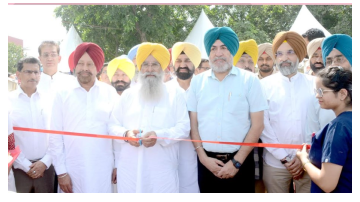
Gurmeet Singh Khuddian, Cabinet Minister, Punjab Inaugurates Pashu Palan Mela
Sep18,2026
| Jagrati Lahar Bureau | Ludhiana
Different value added products and literature released
Ludhiana, 18 September 2026
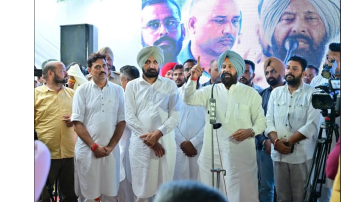
The Pashu Palan Mela of Guru Angad Dev Veterinary & Animal Sciences University, Ludhiana, was inaugurated by S. Gurmeet Singh Khuddian, Cabinet Minister for Animal Husbandry, Fisheries and Dairy Development of Punjab. During his visit, he toured various stalls, observed different livestock breeds, and appreciated the university’s efforts in showcasing research technologies and farmer-oriented services.
Addressing the gathering, S. Khuddian said that animal husbandry has been an integral part of Punjabi culture since ancient times; in the past, a person's wealth was often gauged not merely by their landholdings, but by the size of their livestock herd. He said that by embracing the animal husbandry sector on a larger scale, we could achieve a surplus in milk production, thereby significantly improving public health and farmers' incomes. He emphasized that no aspect of animal husbandry is insignificant. He commended the university for its research initiatives, training programs for livestock farmers, and efforts towards quality production, and expressed his appreciation to the scientists.
The inaugural function was attended by S. Gurditt Singh Sekhon, MLA, S. Gurpeet Singh Banawali, MLA, S. Jagdeep Singh Brar, MLA, Dr. Paramdeep Singh Walia, Director Animal Husbandry, Punjab, Dr. Devi Singh Rajput, ADEE, RAJUVAS, Sh. Sanjeev Kumar, DDM, NABARD, Sh. Jyoti Saroop Unnati Cooperative along with officers, teachers, employees, and other distinguished guests.
Dr. Jatinder Paul Singh Gill, Vice-Chancellor, said that significant work regarding breed improvement is underway at the university, involving the supply of superior germplasm. Embryo transfer technique has successfully resulted in the pregnancy of around 1,200 animals, leading to the birth of approximately 800 calves and buffalo calves. The university also supplies chicks to assist poultry farmers. The university maintains various laboratories for diagnosing diseases in both animals and humans. A new mobile feed testing laboratory has recently been launched, capable of visiting farmers' doorsteps to test animal feed. He informed that this mela’s theme was focused about special emphasis regarding sharing the awareness about importance of biosecurity and the theme of Mela was “strengthen the biosecurity- prevent animal diseases” to inform the livestock farmers about biosecurity measures.
Dignitaries launched different value added products. ‘Makhmali Cream Cheese’ is a high-value-added dairy product developed from buffalo milk. It contains about 31% fat and 9% protein per 100 g, with less than half the fat content of butter. Another released ‘Ricotta Cheese Spread’ is a nutritious value-added dairy product prepared from cheese whey. It has a soft, creamy and spreadable texture with a pleasant taste and helps in the effective utilization of cheese whey.
‘Goat Milk Feta’ is a high-value-added cheese prepared from goat milk. It has a characteristic soft, crumbly texture and a pleasant, tangy taste. ‘Cottage Cheese’ is a high-value-added dairy product that is rich in protein and low in fat. It has a soft, mild and creamy texture and can be used in a variety of culinary preparations. ‘Sahiwal Cow Milk’ was also launched at the function. The ‘Paper-Based Milk Adulteration Detection Kit’ is a simple and convenient kit for quick screening of common adulterants in milk.
A Compilation of all the Chief Minister’s awards recipients booklet, a book titled ‘India’s Meat Heritage’ and an APP named ‘Antoflip: flip and learn’ were also released.
Dr. Ravinder Singh Grewal, Director of Extension Education, revealed that visitors showed considerable interest in goat, pig, equine, and fish farming. He informed that the university regularly conducts specialized training programmes for interested farmers. Various departments displayed publications on livestock management and distributed educational literature. A special interactive session on scientific livestock farming was also organized, featuring expert lectures and question-answer discussions.
Several departments established informative stalls offering practical guidance and technical inputs. Superior germplasm of cows, buffaloes, goats, and poultry developed by the university was displayed. Experts provided advice on livestock, poultry, and fisheries farming and discussed solutions to common field challenges. Live demonstrations on milk testing kits, mastitis detection kits, teat-dip practices, and acaricide use attracted considerable attention.
The College of Fisheries showcased carp species, ornamental fish, azolla, duckweed cultivation, and integrated fish-livestock farming models. Visitors expressed keen interest in fisheries entrepreneurship, ornamental fish culture, shrimp farming, and saline-water aquaculture. The stall also featured value-added fish products for sale.
Food stalls established by the College of Dairy and Food Science Technology and the Department of Livestock Products Technology offered a variety of vegetarian and non-vegetarian products, including sweet and salted lassi, flavored milk, curd, sweets, whey drinks, paneer, milk cake, dhoda barfi, meat patties, and other processed meat products.
The Animal Nutrition Department attracted large numbers of farmers with its area-specific mineral mixtures, pig mineral mixture, bypass fat, and uromin lick products, all developed by the university and made available at affordable prices. Self-Help Groups trained by the university displayed value-added products for exhibition and sale, generating significant interest among rural youth and aspiring entrepreneurs.
University publications also remained a major attraction. The Directorate of Extension Education displayed books written in simple local language and offered them at nominal prices. Many farmers registered for the university’s monthly magazine, Vigiyanak Pashu Palan.
Prominent veterinary pharmaceutical companies, livestock equipment manufacturers, and feed producers also participated in the mela. Departments of Animal Husbandry, Dairy Development, and Fisheries of the Punjab Government showcased their services and schemes. Livestock associations established under the university’s guidance also enrolled new members during the event.
The mela attracted thousands of farmers from across Punjab and neighboring states. Dignitaries, government officials, heads of departments, faculty members, students, and university staff also participated enthusiastically. The Pashu Palan Mela will continue on 19 September 2026 also.
-pashupalanmela-gadvasu-gurmeetsinghkhuddian-animalhusbandry-ludhiananews









 RSS FEED