
*tobacco Control: A Model Of Success For Global Health In The 21st Century-prof. Les Hagen*
Jun7,2026
| Jagrati Lahar Bureau | Chandigarh
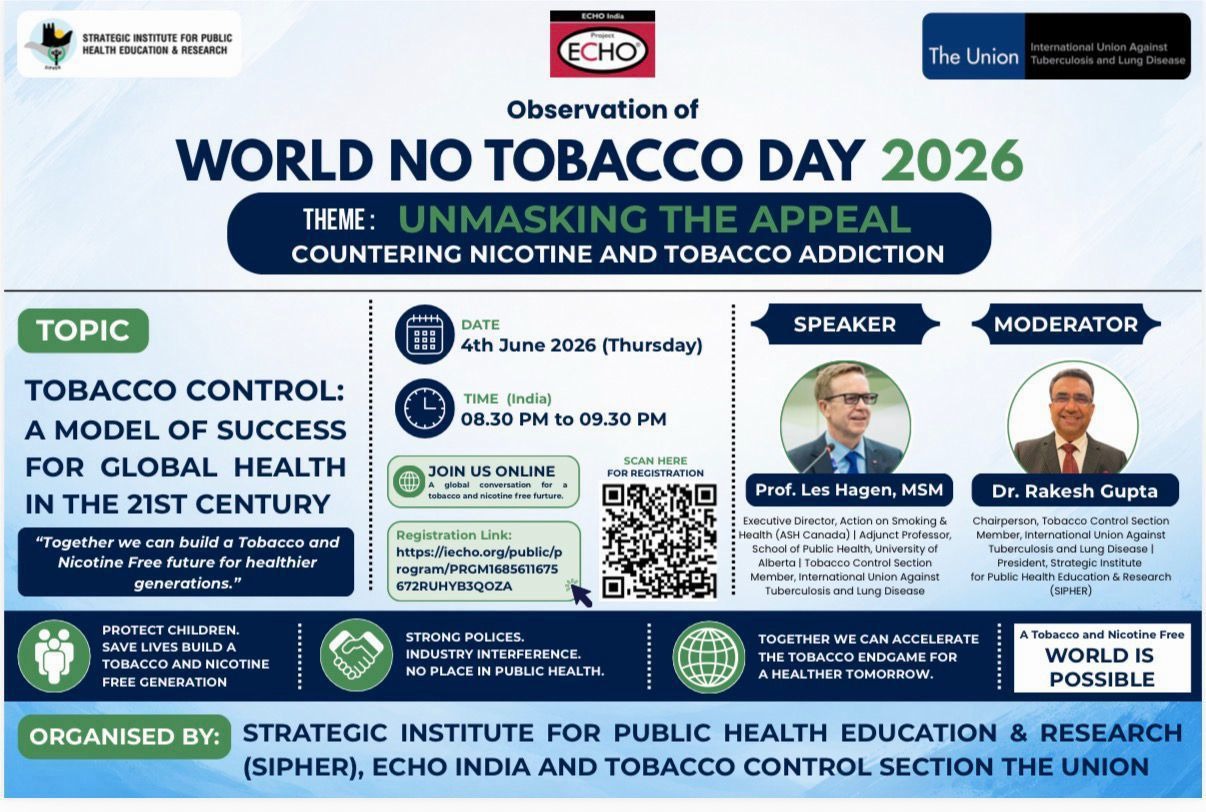
*Tobacco Control: A Model of Success for Global Health in the 21st Century-Prof. Les Hagen*
Prof. Hagen, MSM, Executive Director of Action on Smoking & Health (ASH Canada) and an Adjunct Professor at the University of Alberta School of Public Health, presented his editorial published in BMJ Tobacco Control. The title was “Tobacco Control: A Model of Success for Global Health in the 21st Century”.
He told the participants that, in October 2000, the International negotiating body proposed a Framework Convention on Tobacco Control (FCTC) and held its inaugural meeting to begin drafting the world’s first public health treaty, which subsequently entered into force in 2005. The treaty’s early implementation coincided with an alarming projection that, left unchecked, one billion people would die from tobacco use by the end of the 21st century. Today, the FCTC has 183 Parties, many of which have implemented comprehensive tobacco control measures.
He elaborated that, despite challenges, global tobacco use is now at a record low in this century and continues to decline. Although the original 2025 target was missed, it should be achieved by 2030 if current trends persist. Treaty implementation has resulted in 118 million fewer people who use tobacco since 2005. Treaty acceleration has been supported by the WHO MPOWER policy package and the FCTC Global Strategy, which both include high- impact measures aligned with key FCTC articles. The WHO Tobacco Free Initiative and the FCTC Secretariat are supporting these efforts. Funding has been provided by Bloomberg Philanthropies, the Gates Foundation and a few high- income countries. Several civil society organisations participate in treaty acceleration efforts, including the Global Alliance for Tobacco Control, the International Union Against Tuberculosis and Lung Disease, Vital Strategies, the Campaign for Tobacco- Free Kids, the International Union Against Cancer, ASH Canada (Action on Smoking & Health), Cancer Research UK, and many others.
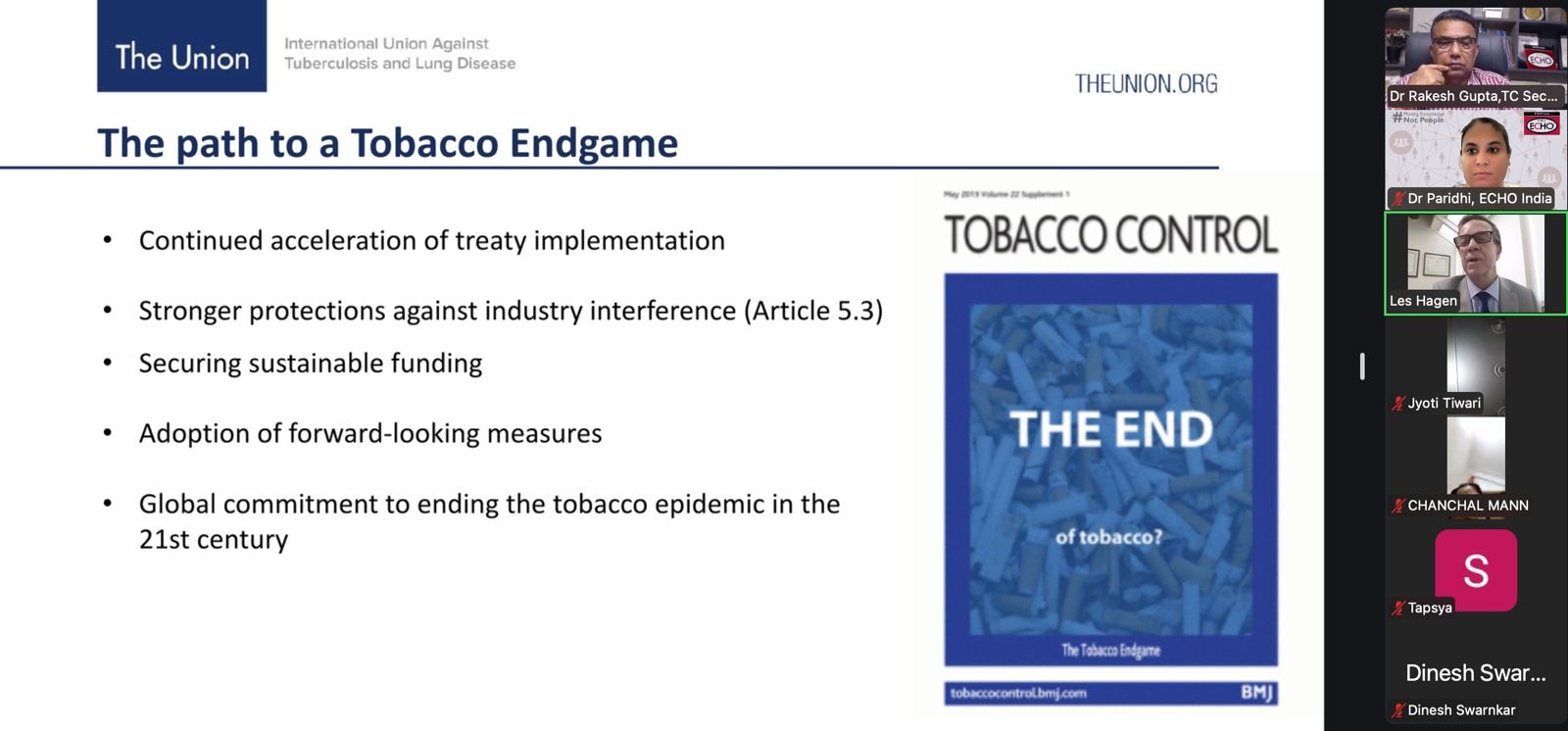
He reiterated that treaty monitoring and reporting have been enhanced by the Global Tobacco Control Progress Hub16—an independent surveillance platform designed to enhance treaty implementation. Three dozen civil society organisations from as many countries have used the platform to create FCTC ‘shadow reports’ to document and shape tobacco control efforts in their country. Almost all these organisations are from low- income and middle- income countries, representing a combined population of 3.2 billion people. The global tobacco control community should be proud of the considerable progress in reducing tobacco use in the first quarter of the 21st century. However, there is no time to rest on laurels or allow the tobacco industry to regain ground. A tobacco endgame can be achieved if we continue to accelerate treaty implementation and build on success. There are at least one billion reasons why we need to make tobacco history within this century.
Dr. Rakesh Gupta, Chairperson, Tobacco Control, The Union and President of SIPHER said that, Tobacco use remains one of the leading preventable causes of disease and premature death worldwide. Adolescents and young people are particularly vulnerable to initiating tobacco use due to peer influence, easy access to tobacco products, and limited awareness about the associated health risks.
He added that this year's theme of the WHO, World No Tobacco Day 2026, was:“Unmasking the appeal-countering nicotine and tobacco addiction.”This theme is both timely and urgent.
Today, the tobacco and nicotine industry is no longer relying only on conventional cigarettes or smokeless tobacco. It is aggressively targeting our children and adolescents through modern, attractive, and deceptively marketed products such as e-cigarettes, vapes, nicotine pouches, flavoured products, and sleek gadget-like devices.
These products are intentionally designed to appear harmless, fashionable, and socially acceptable. Bright packaging, fruit flavours, digital marketing, influencer promotion, and easy online access are all part of a calculated strategy to create a new generation's addiction to nicotine.
The online presentation was organised by TOBACCO CONTROL SECTION THE UNION, STRATEGIC INSTITUTE FOR PUBLIC HEALTH EDUCATION & RESEARCH (SIPHER), ECHO INDIA AND INDIAN MEDICAL ASSOCIATION (IMA) CHANDIGARH
Tobacco-Control-A-Model-Of-Success-For-Global-Health-In-The-21st-Century-prof-Les-Hagen






















 RSS FEED