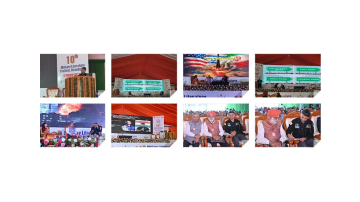
Axiom Was Practice; Real Target Is Gangayaan; Group Captain Shubanshu Shukla Mesmerises Audiences At Mlf 2026
Nov14,2026
| Jagrati Lahar Bureau | Chandigarh
URGES STUDENTS TO FOLLOW DREAMS WITH COURAGE AND WILLPOWER TO
SUCCEED
CHANDIGARH, NOVEMBER 14: Underlining that he never felt alone as whole of nation
was part of his mission to Space, Group Captain Shubanshu Shukla, Ashok Chakra on
Saturday listed out his real mission to see a fellow Indian plant the Tricolour on the Moon by
2040.
After Axiom, I am actively engaged in preparing our national mission Gangayaan succeed
and further contribute towards our India's growth and prosperity", Group Captain Shukla said
here while delivering a talk at the 10th Military Literature Festival here today.
The specially curated session named "From Fighter Cockpit to Space Craft: India's New
Frontier in Air and Space Power" witnessed Group Captain Shukla, Ashok Chakra deliver a
detailed and engrossing presentation of his 20 days and 3 hours journey on Axiom Mission 4
in June 2025 to space and back, at MLF today.
A joint initiative of the Punjab government, Chandigarh Administration and Headquarters
Western Command at Chandimandir, the annual Military Literature Festival (MLF) offers
youngsters aspiring to join the defence forces a peep into the discipline of Military life,
besides laying an engrossing platform for discussions on issues of national, international and
geo-political salience.
The internationally recognised Astronaut shared his experience of taking off from the
International Space Station (ISS) in US on the Space Capsule as "violent and chaotic" much
opposite to his expectations.
"As we lifted off from the International Space Station (ISS) it crossed my mind as to whether
I had made the right decision to travel to space" Group Captain Shukla said adding that initial
anxiety and confusion are inbuilt in any challenge.
Urging youngsters to take up science to follow their dreams with courage, he said classrooms
foster audacious dreams which have to be nurtured with courage and spirit to succeed and
serve the society.
Sharing his inflight experience of staying in Space X Falcon 9 rocket for over 20 days, he
said the loss of gravity makes you feel awkward at first.
"You grow taller in size; your heart becomes smaller in size and there are numerous physical
and mental changes you feel while in space. Though you prepare for each challenge, the real
power comes to you from your conviction to go back and serve the society through research,"
he added.
Motivating youngsters to take up challenges in the right spirit, Group Captain Shukla shared
with the audience that Mission Director Dr. Peggy Whitson endured 9 rejections for her
application as Astronaut before being chosen to fly to space at the age of 39.
"That Dr. Whitson now has the longest stay in space is motivation to all those feeling
negative at any stage in their life, he added.
MILITARY LITERATURE FESTIVAL 2026
WITH CHINA FAR AHEAD EVEN OF USA, WORLD ORDER STANDS AT AN
INFLEXION POINT", EXPERTS OPINE NEED FOR STRATEGIC RECALBIRATION
CHANDIGARH, NOVEMBER 14: Underpinning the unpredictable and chaotic Geo-
political order where our immediate neighbour China today is 30-50 years ahead of India,
subject experts here on Saturday said that India needs an effective and regular easement of its
national security needs and aspirations.
With China far ahead even that of the US, the world order is rapidly imploding with leading
global powers expending military energies in pursuits ranging from objectives of territory
gain, to securing oil reserves, to regime change. This culminates in the urgent need for India
to review and fortify its security architecture through innovations in space, cyber and
Artificial Intelligence.
These views were expressed by the distinguished speakers here during a panel discussion on
topic 'Turbulent World Order: Where India Stands', on the 2nd day of the Military Literature
Festival (MLF) 2026 being held at the Lake Club here.
A joint initiative of the Punjab government, Chandigarh Administration and Western
Command Headquarters at Chandimandir, the annual Military Literature Festival (MLF)
offers youngsters aspiring to join the defence forces a peep into the discipline of Military life,
besides laying an engrossing platform for discussions on issues of national, international and
geo-political salience
Sharing his thoughts during the discussion, Sushant Sareen said there is nothing called
strategic dependence and that at the most it was just a euphemism.
"Even US is dependent upon so many other countries for making up its needs and aspirations.
No nation can be fully dependent upon any one country. We need to outgrow this perception
as each country today prioritises its own needs, Sareen said.
Referring to impact of ongoing wars - involving Russia, Ukraine on one side and US and Iran
on the other - on equation between old partner nations, Sareen said that there is bound to be
some resistance which may not eventually result in a major alliance in Europe.
Middle powers which in today's scenario is the European nations, may resist to some extent
but there will not be any major new alliance, he added.
Ambassador Gurjit Singh while underlining ever changing face of asymmetrical warfare said
that an integrated approach mingling space technology, cyber architecture and dronery will
make a potent ecosystem to tackle rising threats.
Referring to tangible and upsetting instability and inconsistency in global outlook said that
ongoing wars in Africa today show that it is not only the privilege of superpowers only to
inflict damage by starting wars.
The world order needs stability which can only come from a position of strength for a
particular nation, he added.
In context of India Pakistan relations, Ambassador Yashvardhan K Sinha said that character
of warfare has changed dramatically which was evident in US-Iran conflict where supply and
choke points have been weaponised to inflict collateral damage.
Though we must keep preparing for conventional warfare, the need to ramp up our
technology in space and cyber domains is critical, he added.
MILITARY LITERATURE FESTIVAL 2026 | CHANDIGARH*
DAY 2 | NOVEMBER 14, 2026*
INDIA AND THE NEW WORLD ORDER: STRATEGIC POWER, FUTURE WARFARE
AND THE GEOPOLITICS OF CONFLICT
Ukraine, space warfare, West Asia and India's strategic ambitions dominate high-level
military and diplomatic deliberations
CHANDIGARH, November 14: The second day of the Military Literature Festival 2026
brought together an eminent gathering of diplomats, senior military commanders, strategic
affairs experts and India's space leadership to examine the geopolitical shifts and
technological transformations redefining global security.
Five high-level panel discussions addressed India's strategic position in a multipolar world,
lessons from the Russia–Ukraine war, human spaceflight, the militarisation of outer space
and the strategic and energy-security implications of the West Asian conflict.
Indias Strategic Position in a Changing World
Moderated by Ambassador Gurjeet Singh, Panel 1, Turbulent World Order – Where India
Stands, featured Ambassador Yashvardhan Kumar Sinha and strategic affairs expert Sushant
Sareen.
The discussion examined India's strategic autonomy amid intensifying US–China
competition. The speakers highlighted indigenous manufacturing, technological self-reliance,
artificial intelligence, semiconductor capabilities, economic competitiveness and
development diplomacy as essential to India's emergence as an independent global pole.
Ukraine and the Future of Warfare
Panel 2, Relevance of Russia–Ukraine War to the Indian Subcontinent, moderated by
Brigadier Anshuman Narang, featured Major General John Kendall, Lieutenant General Raj
Shukla (Retd.) and Ambassador Venkatesh Verma.
Drawing on the Ukraine battlefield, the discussion examined the transformation of warfare
through drones, electronic warfare, autonomous systems, artificial intelligence, cyber
operations and space-based intelligence. The panellists stressed the importance of
technological adaptation, industrial resilience and indigenous defence innovation for India's
future preparedness.
Indias Human Spaceflight Ambitions
A major highlight was Panel 3, From Fighter Cockpit to Spacecraft – India's New Frontier in
Air and Space Power, featuring Group Captain Shubhanshu Shukla.
Sharing first-hand insights from his historic mission aboard the International Space Station,
he discussed astronaut training, microgravity, scientific experimentation and the demands of
human spaceflight. He outlined India's ambitions through the Gaganyaan programme, the
proposed Bharatiya Antariksh Station and the vision of an Indian astronaut reaching the
Moon by 2040.
His observation, “You become comfortable in being uncomfortable,” captured the discipline,
resilience and determination underpinning India's space ambitions. He also encouraged young
people to pursue opportunities in space science and exploration.
Space Warfare and the New Security Frontier
Panel 4, Space Warfare – You Can Run But Not Hide, moderated by Maj Gen Amritpal
Singh, featured Lt Gen Kuldip Singh Sindhu, Maj Gen Neeraj Bali and Maj Gen Harvijay
Singh.
The discussion examined the growing militarisation of outer space, satellite vulnerabilities,
counter-space capabilities, electronic and optical disruption, directed-energy technologies and
proximity operations. China's expanding counter-space capabilities and their implications for
India's security also received attention.
The panellists underscored the need for resilient satellite infrastructure, indigenous
capabilities and effective protection of critical space assets as space becomes an increasingly
important domain of national defence.
West Asia: Conflict, Geopolitical Realignment and Energy Security
Panel 5, West Asia War, Geopolitical Instability and the Energy Crisis, featured Dr. Deepika
Saraswat and Ambassador Yashvardhan Kumar Sinha, with Maj Gen Amritpal Singh as
moderator.
Dr. Saraswat examined the erosion of expectations of regional stability following the Hamas
attacks of 7 October 2023, analysing the Israel–Iran confrontation, unresolved regional
conflicts and their implications for the wider security architecture.
Ambassador Sinha, drawing on more than 37 years of diplomatic experience, including
postings in Cairo, Riyadh and Abu Dhabi and service as India's Consul General in Dubai,
traced the historical roots of West Asian rivalries to the Sunni–Shia schism and the Battle of
Karbala. He highlighted the continuing influence of historical grievances, regional alignments
and external powers.
Maj Gen Amritpal Singh broadened the discussion to changing international alliances,
China's growing influence, Africa's emergence as an increasingly significant energy and
geopolitical actor, and uncertainty surrounding US foreign policy and NATO cohesion.
The discussion highlighted the wider consequences of West Asian instability for global
energy markets, international relations and India's strategic interests.
Military Heritage and the Next Generation
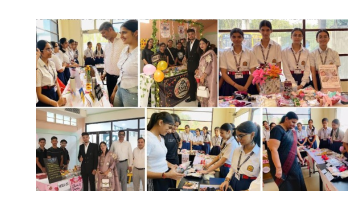
Adding a distinctive educational dimension, “Saga of Courage and Bravery,” presented by
Defence Studies students of Government College, Sector 11, Chandigarh, brought India's
military heritage, valour and traditions of sacrifice into focus.
The festival also featured the Clarion Call Theatre's war films, cultural performances,
weapons display, military paintings, philately and vintage automobiles. Interactive Samvaad
sessions enabled visitors to engage directly with Param Vir Chakra and Maha Vir Chakra
awardees.
Strategic Dialogue for a Changing World
Day 2 reinforced the interconnected nature of contemporary security challenges, where
military capability, technological innovation, diplomacy, economic resilience and energy
security increasingly shape national power.
The Military Literature Festival continues to provide an important national platform for
informed engagement between the armed forces, diplomatic community, strategic thinkers,
academia and the next generation
10th-Military-Literature-Festival-Chandigarh











 RSS FEED