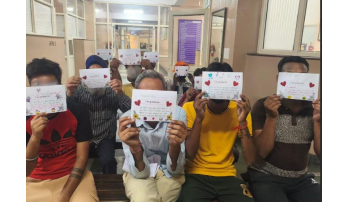
*addiction To Expression: Art Therapy Sessions Rebuilding Lives At Punjab Govt-run De-addiction Centres In 15 Districts As Part Of Yudh Nashean Virudh Campaign*
Jun8,2026
| Jagrati Lahar Bureau | Chandigarh
*Bhagwant Mann Govt is ensuring that all victims of drug abuse receive emotional & psychological support through these art therapy sessions: Dr Balbir Singh*
Colours, paint brushes and sketch books are unlikely tools, but they are supporting Punjab’s fight against drug addiction under the Yudh Nashean Virudh campaign.
Art therapy sessions are aiding the recovery and rehabilitation of victims of drug abuse at 30 government-run de-addiction and rehabilitation centres across 15 districts of Punjab. They are helping patients manage withdrawal symptoms, express their emotions creatively and regain confidence.
Introduced as part of the holistic rehabilitation plan with the help of the Leadership in Mental Health Programme (LMHP), India’s first fellowship dedicated to preventing and mitigating substance use harms, art-based activities such as sketching, painting, colouring and craft-making are being used alongside medical treatment and counselling. The art-based therapy is producing very encouraging results among patients admitted for de-addiction and rehabilitation.
At these centres, patients spend dedicated time every week engaging in creative activities. The artwork mostly reflects their personal lives and journeys, memories with loved ones, and their challenges and aspirations to lead a normal life.
One of the biggest challenges in treating victims of substance abuse is encouraging them to open up about their suppressed feelings, emotions and experiences. Art therapy is helping bridge that gap.
Bhavna Sharma, a counsellor at Swami Vivekanand De-addiction Centre, Government Medical College, Amritsar, says, “When patients come to us, they do not share much. They are full of anxiety and have difficulty expressing their emotions. During art therapy sessions, they start expressing their feelings through activities such as colouring and drawing. We have started multimodal art therapy, visual art therapy, expressive art therapy and mindfulness-based art activities, so that the victim understands his own feelings and can subsequently plan his journey towards a drug-free life and remain hopeful about the future.”
Navneet Kaur, another counsellor at Swami Vivekanand De-addiction Centre, Government Medical College, Amritsar, says the sessions are also helping victims stay positive during their recovery period. “Many people during their recovery period struggle to express themselves. Art therapy offers them a safe outlet for expression through drawing, colouring and similar activities. We have seen such victims become calmer and develop a sense of inner peace.”
The counsellor also praised novel initiatives like the LMHP fellowship, which, through young professionals from the fields of psychology and social work, is bringing state-of-the-art mental wellbeing practices to government health facilities.
Victims undergoing treatment say the benefits of art therapy go beyond the art room. Many say these sessions are a welcome distraction from cravings and offer renewed self-belief.
A recovering victim of drug abuse, Gurtej Singh (name changed), who belongs to Tarn Taran, said, “Ever since I was introduced to art therapy, flower bouquet making, colouring and painting, I realised that such small, beautiful things can make a big difference in one’s life. In my case, it really helped me get through the difficult phase of withdrawal symptoms. Now, I do not carry those negative thoughts in my mind and feel completely at peace.”
Another beneficiary of the government’s drug de-addiction and rehabilitation programme is Rupinder Singh (name changed). He belongs to Raja Sansi and is admitted to the rehabilitation centre at Government Medical College, Amritsar. He says, “Art therapy has brought inner calm to me. Earlier, I used to be in constant depression. I got into drug abuse during my school days. The treatment here has helped me a lot. Especially, the art therapy introduced to me took my mind away from any temptation towards substance abuse. I feel happier now, and it has restored my confidence.”
Dr Balbir Singh, Punjab Health and Family Welfare Minister, stated, “As part of the Yudh Nashean Virudh campaign, the Bhagwant Mann government is ensuring that all victims of drug abuse receive emotional and psychological support through these art therapy sessions. Rehabilitation is not just about saying ‘no’ to drugs; it is about supporting patients’ physical and mental wellbeing, helping them rebuild their lives and reintegrate into the community.”
Over 290 patients like Gurtej and Rupinder have participated in and benefited from art therapy in the span of just one week. The growing popularity and success of these art therapy sessions at de-addiction and rehabilitation centres reflect the Bhagwant Mann government’s patient-centric approach to treatment.
The expression of emotions through creativity helps victims of drug abuse build self-esteem and remain on the path to recovery. These simple activities are already offering victims of drug abuse a fresh canvas on which to rebuild their lives.
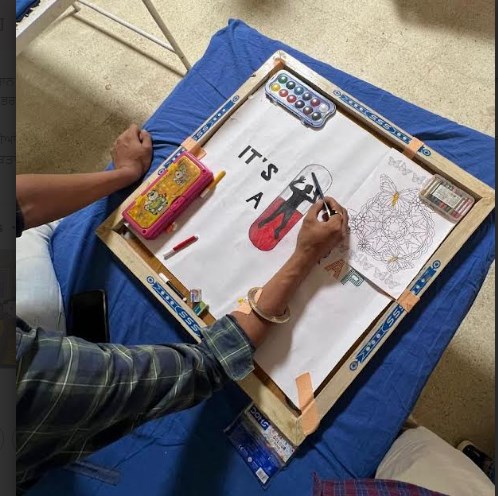
Addiction-To-Expression-Art-Therapy-Sessions-Rebuilding-Lives-At-Punjab-Govt-run-De-addiction-Centre







 RSS FEED